


After 4 years in talent acquisition, we have watched AI transform from a buzzword into a necessity. 67% of organizations now use some form of AI in their recruitment process, but here's what nobody talks about enough: not all AI in hiring is created equal.
AI Recruitment Impact Dashboard 2025
Real-world metrics from organizations implementing AI-powered hiring
Last March, the ACLU filed charges against Intuit and HireVue after their AI video interview platform allegedly discriminated against a deaf, Indigenous woman. The complaint claimed the AI's speech recognition performed worse for non-white speakers and deaf candidates, criticizing her communication abilities when she requested (and was denied) proper captioning accommodation. Both companies deny the allegations, but the case sent shockwaves through the recruitment industry.
This isn't an isolated incident. In 2024, Workday faced a class action lawsuit alleging its AI screening tools discriminated against applicants over 40. CVS privately settled another case involving HireVue's facial expression tracking that allegedly assigned "employability scores" based on smiles and smirks. The Electronic Privacy Information Center has called out platforms for using biometric data analysis without proper transparency.
The pattern is clear: AI that makes final hiring decisions without human oversight creates legal liability and ethical problems.
When AI in Hiring Actually Makes Sense
After evaluating hundreds of platforms, we have concluded that responsible AI in recruitment follows three principles:
AI should assist, not replace, human judgment. The best platforms put AI in supporting roles: screening resumes faster, scheduling interviews automatically, taking notes during calls. Humans make the final hiring decisions.
Transparency matters more than sophistication. You should be able to explain to any candidate exactly how AI influenced their application. Black box algorithms that can't explain their decisions are lawsuits waiting to happen.
Regular bias testing isn't optional. Any AI system trained on historical data can perpetuate historical biases. The platforms worth your time conduct regular audits and provide visibility into their decision-making processes.
With that framework in mind, here are five platforms that use AI responsibly while delivering real efficiency gains.
1. Equip: Best for AI Assessment & Conversational Interviews
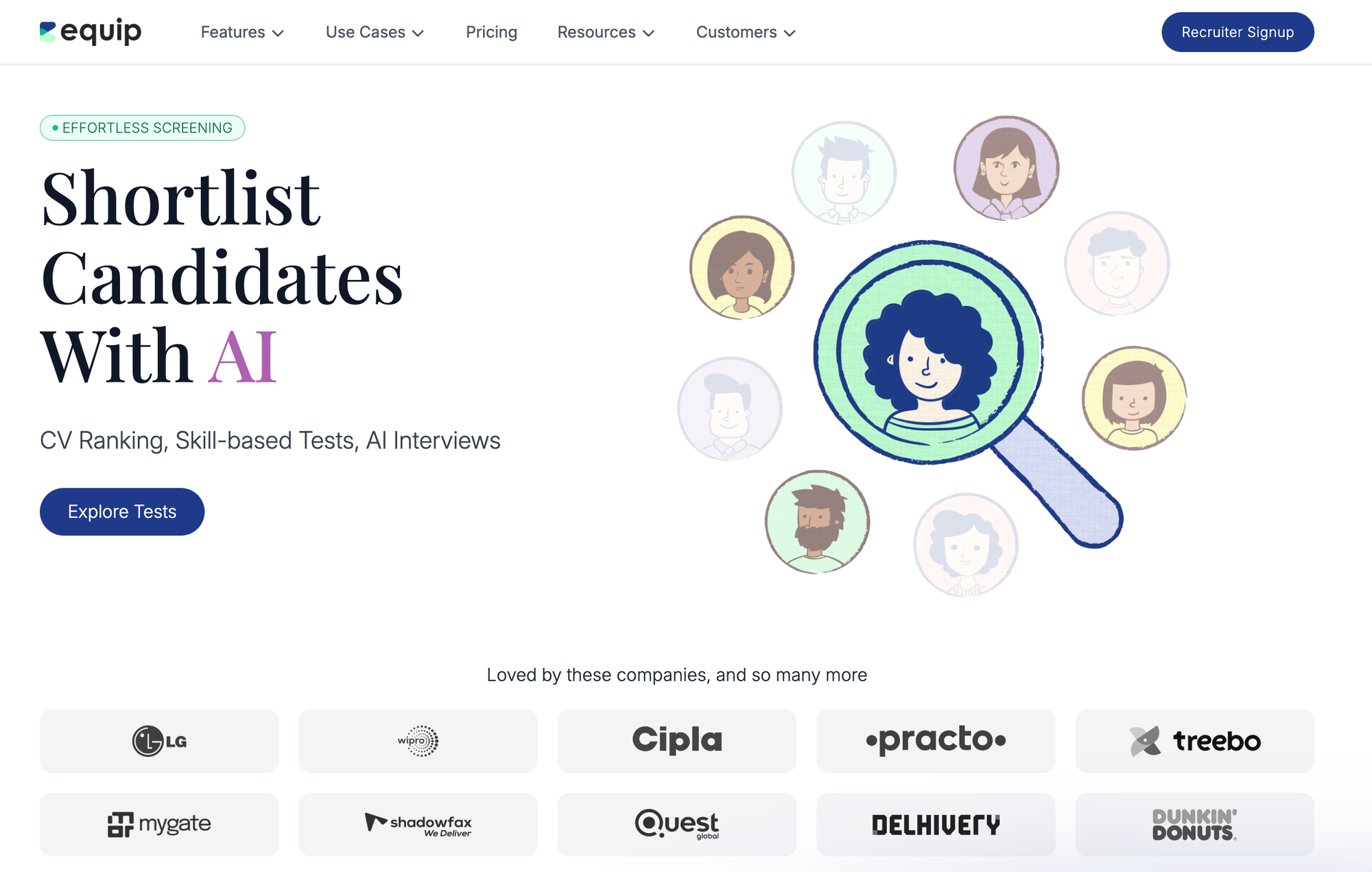
What makes it different: Equip takes a practical approach to AI-powered assessments. Rather than trying to replace human judgment entirely, it automates the time-consuming parts of candidate evaluation while keeping recruiters in control.
The AI features that matter:
Equip's standout feature is its conversational AI interview system. Unlike traditional assessments that rely solely on multiple-choice questions or coding challenges, Equip can conduct conversational interviews at scale. The AI asks role-specific questions, evaluates text, video, and audio responses, and generates detailed scorecards. But you set the evaluation criteria.
The platform also handles resume screening using natural language search. Instead of boolean operators, you can type "show me people with 7+ years in startups who speak Spanish" and get semantically relevant matches, not just keyword hits.
Equip offers AI-proctored assessments with dual-device monitoring. It uses the candidate's phone as a secondary device to get a 360-degree view of their test-taking environment.
The practical implementation:
It is priced at $1/candidate with no subscriptions, no annual contracts. For high-volume hiring drives where you're evaluating hundreds of candidates, this pricing model makes more sense than enterprise platforms charging millions annually.
The AI evaluation system requires upfront work: you define what "good" looks like for each question by providing evaluation prompts. But once configured, it processes multiple responses in parallel, mimicking what your best recruiters would do in phone screens.
Where it fits: What sets Equip apart is its breadth as a comprehensive hiring platform. While many tools specialize in one area, Equip combines best-in-class skill assessments, state-of-the-art AI proctoring (including ID verification, impersonation detection, and AI tool usage monitoring), resume screening, and AI interviews with automatic transcription and evaluation. All in a single platform.
Instead of stitching together separate tools for screening, assessment, proctoring, and interviews, you get end-to-end candidate evaluation in one system. For enterprises and startups, this eliminates the integration headaches that plague multi-vendor tech stacks.
If you're screening 500+ candidates per hiring cycle, Equip's pay-per-candidate model beats traditional assessment platforms that charge based on seats or subscriptions. The unmatched proctoring capabilities mean you can trust results even for remote assessments at scale.
The limitation: If you need comprehensive ATS functionality or deep integrations with your existing HR tech stack, you'll need additional tools.
2. Paradox (Acquired by Workday): Best for Conversational AI Recruitment Automation
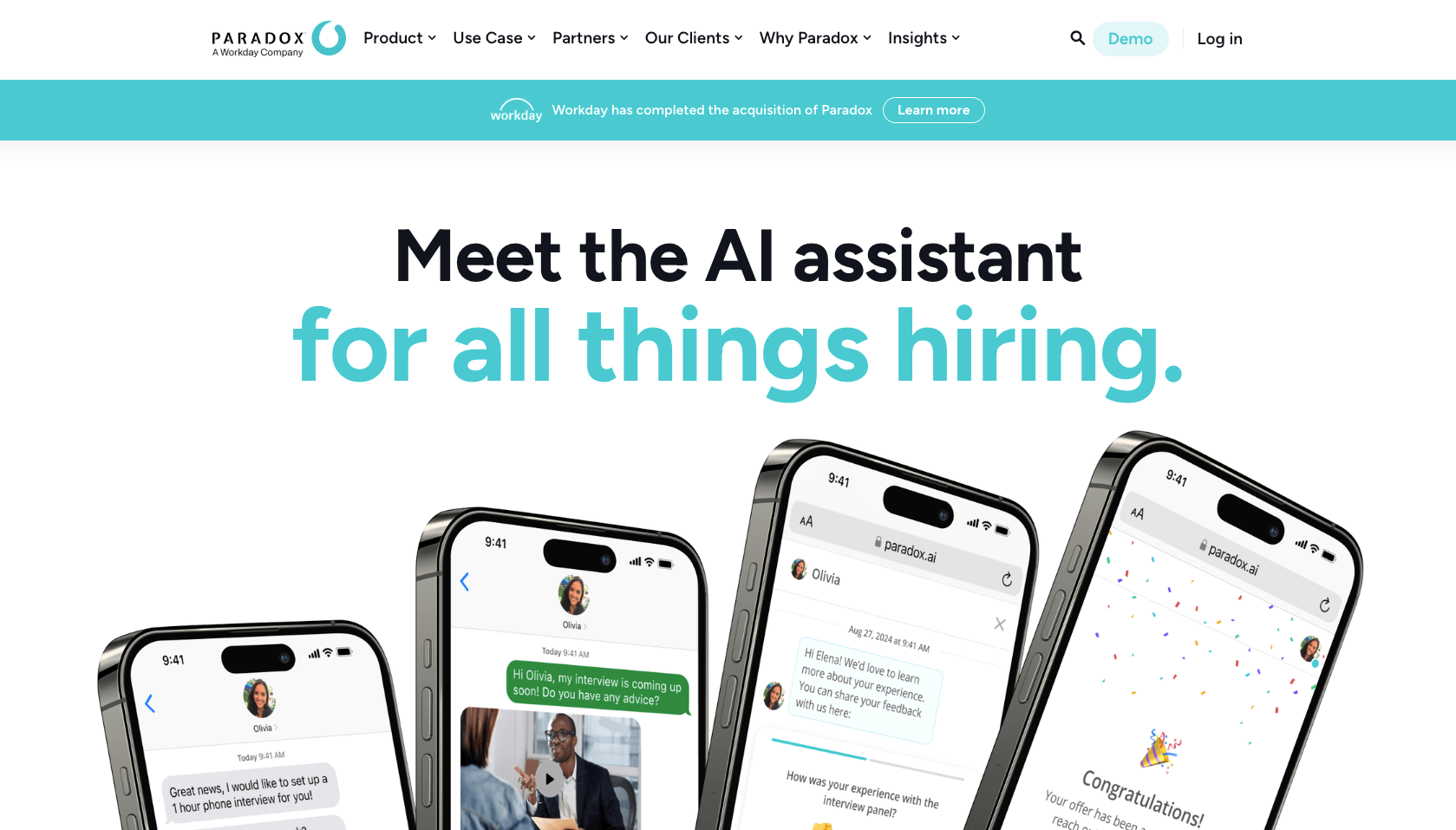
What makes it different: While most platforms bolt AI onto existing workflows, Paradox built its entire product around a conversational AI assistant named Olivia that handles candidate interactions from first contact through scheduling.
The AI features that matter:
Olivia operates 24/7 across SMS, WhatsApp, web chat, and Facebook Messenger in over 100 languages. When a candidate applies to a job, Olivia immediately engages them, answers questions about the role, conducts initial screening based on your knockout questions, and schedules interviews. All without recruiter involvement.
The automation extends beyond simple chatbot responses. Olivia checks interviewer calendars, identifies conflicts, handles rescheduling, sends reminders, and even follows up with candidates who ghost interviews. For high-volume hiring, this eliminates the email tennis that typically consumes 40% of recruiting time.
The practical implementation:
Paradox shines in retail, hospitality, healthcare, and other sectors with constant high-turnover hiring. The platform integrates with major ATS systems (Workday, SAP SuccessFactors, Indeed) and job boards, so it enhances rather than replaces your existing stack.
The August 2025 Workday acquisition signals Paradox's evolution from standalone product to enterprise infrastructure. This could mean better integration for Workday customers but potentially less flexibility for organizations using competing systems.
Where it fits: Organizations hiring hundreds or thousands of frontline workers across multiple locations. If you're filling customer service, sales, retail, or call center roles at scale, Paradox's automation delivers immediate ROI.
The limitation: Pricing isn't public and requires enterprise-level commitment. If you're hiring fewer than 100 people annually, the investment may not justify the returns. Some candidates also report the experience feeling impersonal when passed through an automated funnel.
3. Metaview: Best for AI Interview Notes & Sourcing Insights
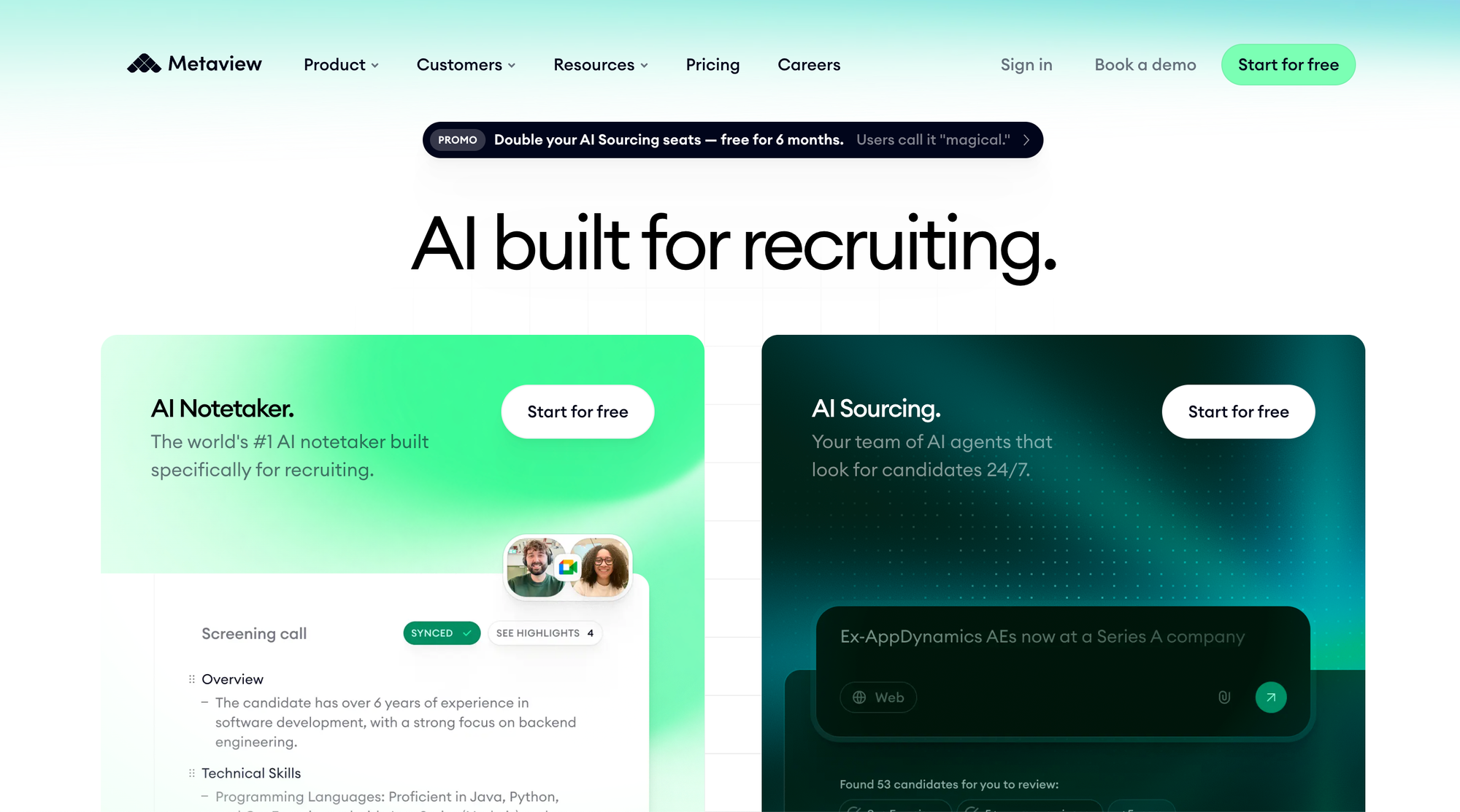
What makes it different: Metaview solves a problem every recruiter knows too well. You can't take great notes and give candidates your full attention simultaneously. This AI notetaker captures everything said during interviews and transforms conversations into structured, actionable intelligence.
The AI features that matter:
Metaview joins your video calls (Zoom, Google Meet, Microsoft Teams) and phone screens, transcribing and analyzing in real-time. But unlike generic transcription tools, it understands recruiting conversations specifically. The AI automatically extracts salary expectations, visa status, notice periods, and other critical hiring data points.
The platform generates customizable notes in bullet or paragraph format, creates candidate summaries highlighting key themes, and can even auto-fill scorecards in your ATS. You choose the detail level—from quick TLDRs for hiring managers to comprehensive notes for your candidate database.
The newest feature, Answers, functions like ChatGPT trained on your hiring data. Type "what did candidates say about our interview process last month?" and get instant answers pulled from every recorded conversation.
The practical implementation:
The AI learns your note-taking style over time, so generated notes increasingly match how you'd write them manually.
Integration with major ATS platforms means candidate data flows automatically. Interview notes, scorecard entries, and debrief summaries appear in the right places without manual data entry.
Where it fits: Recruiting teams conducting 20+ interviews weekly who need to maintain high-quality candidate records without sacrificing interviewer presence. Particularly valuable for companies with distributed hiring teams where consistent documentation matters.
The limitation: Metaview focuses on interview intelligence, not the broader hiring funnel. You'll still need separate tools for sourcing, screening, and candidate relationship management. The platform assumes you're already conducting video or phone interviews. It doesn't help with earlier-stage candidate engagement.
4. Greenhouse: Best for Comprehensive ATS with Built-In AI Features
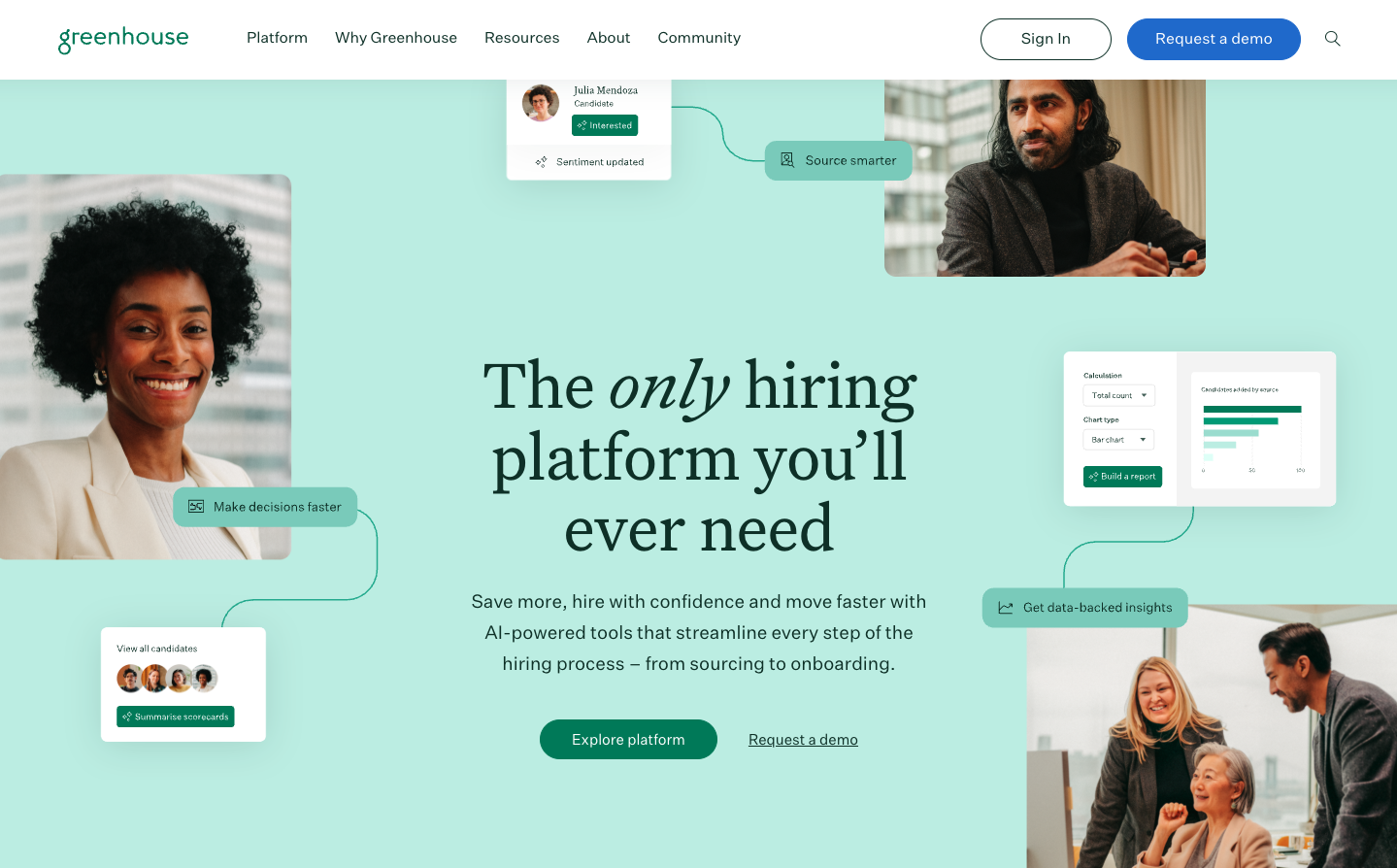
What makes it different: Rather than building a standalone AI tool, Greenhouse embedded AI capabilities directly into workflows where recruiters already work. No switching between systems, no copying data between tools.
The AI features that matter:
Greenhouse's AI suite tackles multiple bottlenecks:
Job description creation: The AI generates professional, inclusive job postings in minutes based on role requirements and organizational data. No more staring at blank templates or inadvertently excluding qualified candidates through poor language choices.
Candidate filtering: AI-powered filters surface top candidates based on years of experience and related skills. Instead of manually reviewing 300 applications, you start with the 30 most qualified matches.
The practical implementation:
What we appreciate about Greenhouse's approach: the AI never auto-rejects candidates. It surfaces recommendations, flags potentially strong matches, and automates administrative tasks. But humans make hiring decisions.
The platform recently improved resume anonymization, automatically removing names, photos, gender indicators, and social media links to reduce unconscious bias during screening.
Where it fits: Mid-to-large organizations needing a full-featured ATS that happens to include thoughtful AI capabilities. Greenhouse works across industries and role types, from hourly workers to executive positions.
The limitation: Greenhouse is built for comprehensive hiring operations, which means complexity and cost. Smaller teams or those with simpler hiring needs might find the platform overwhelming. Pricing isn't publicly listed but typically requires significant investment.
5. Carv: Best for Recruiter Productivity & Applicant Management
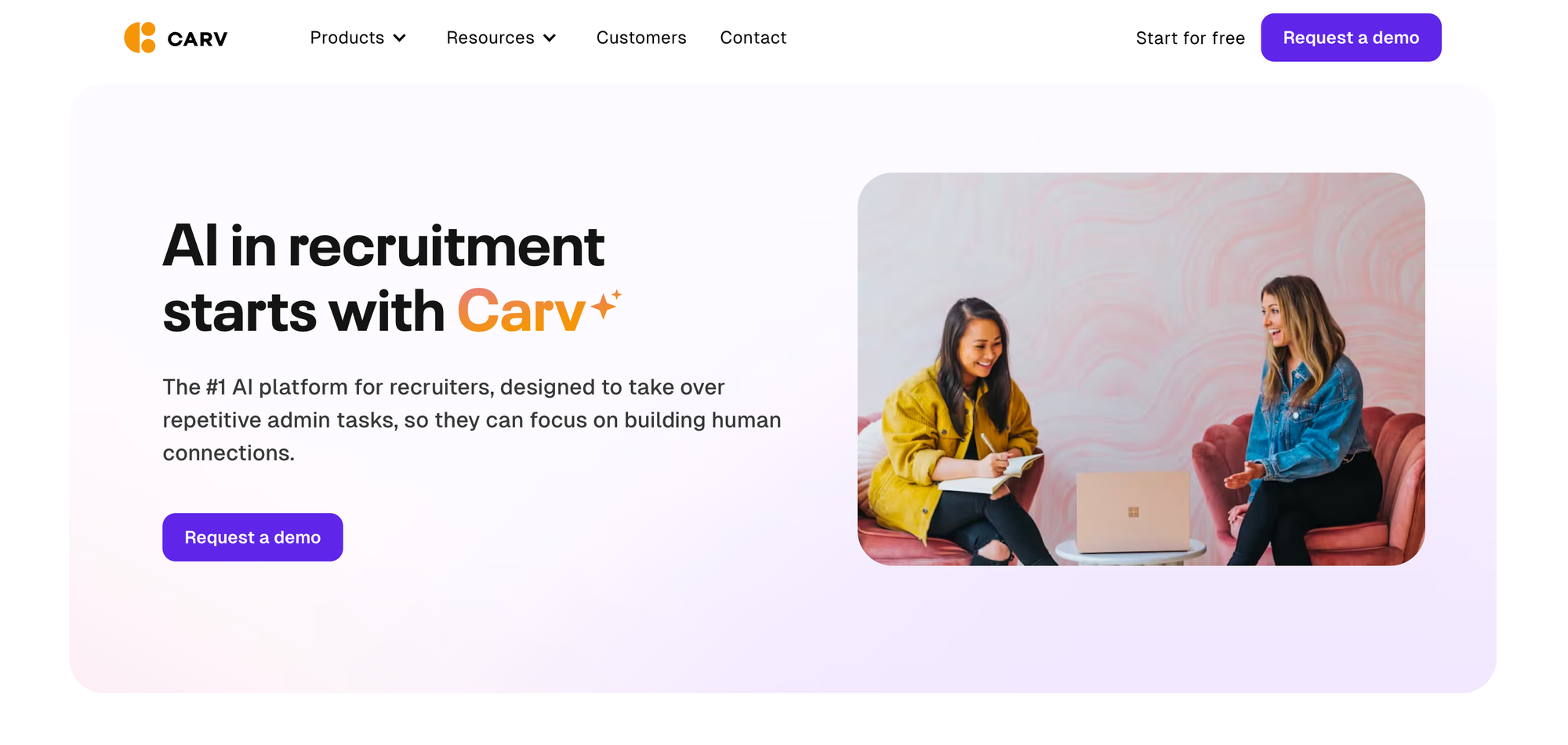
What makes it different: Carv positions itself as the "zero-admin recruiter" platform, using AI to eliminate the documentation and coordination tasks that prevent recruiters from actually recruiting.
The AI features that matter:
Carv's AI joins recruiters during intake calls with hiring managers and interviews with candidates, automating everything that happens before, during, and after these conversations. The platform creates job requirements, candidate presentations, job descriptions, and interview notes automatically.
The combined platform handles chat screening, voice screening, automated sourcing from talent pools, and interview scheduling. It claims to automate 90% of communication with incoming applicants.
The AI continuously updates candidate data across systems, syncing information between your ATS and other tools without manual data entry.
The practical implementation:
Carv holds ISO and SOC 2 Type II certifications, providing security assurance for organizations handling sensitive candidate data.
Where it fits: In-house recruiting teams and staffing agencies handling high volumes who lose hours daily to administrative overhead. Particularly valuable for volume hiring scenarios where recruiters need to focus on relationship-building rather than documentation.
The limitation: Carv is relatively new to market compared to established players. While they've secured major clients like DHL, G4S, and Carrefour, the platform lacks the extensive integration ecosystem and user community of more mature solutions. The actual costs aren't transparent without contacting sales.
The Reality About "AI-First" Platforms
Editor's Note: Many established assessment platforms now claim AI capabilities, but the implementation varies dramatically. TestGorilla and Mettl (both popular in the Indian market) currently offer limited AI features primarily benefiting candidates rather than recruiters. Their core assessment engines remain manually configured.
Similarly, traditional proctoring solutions that bolted on "AI monitoring" often create more problems than they solve, flagging innocent behavior and creating anxiety without meaningfully preventing cheating. The platforms listed above use AI to augment human capability rather than simply add surveillance.
Honorable Mentions: Technical Assessment Leaders
Two platforms deserve recognition for advancing AI in technical hiring specifically:
HackerRank's AI Add-On Package includes sophisticated features for evaluating next-generation developer skills:
- AI-assisted IDE that provides contextual coding help while tracking how candidates leverage AI tools
- AI Interviewer that assesses thought process through dynamic follow-up questions
CodeSignal's Cosmo AI Assistant offers two modes for assessments and interviews:
- Full AI Co-Pilot Mode for advanced challenges requiring real-time AI collaboration
- Complete visibility into candidate-AI conversations for evaluating problem-solving approaches
Both platforms recognize that technical hiring must evolve beyond testing memorized algorithms. The ability to effectively use AI tools is itself a critical skill modern engineers need.
Making the Choice That Protects Your Organization
The HireVue cases taught our industry an expensive lesson: AI that makes consequential decisions about people's careers without human oversight creates legal exposure.
The platforms that will survive regulatory scrutiny share common characteristics:
- Humans make final hiring decisions, not algorithms
- AI functionality is explainable and auditable
- Regular bias testing occurs with documented results
- Candidates understand how AI influenced their application
Your choice depends on your specific hiring challenges:
The AI recruiting revolution isn't coming. It's here. Organizations using AI-powered recruitment report 31% faster hiring times and 50% improvement in quality of hire metrics. The question isn't whether to adopt AI, but which AI to adopt and how to implement it responsibly. Choose platforms that enhance human judgment rather than replace it, and you'll avoid becoming the next cautionary tale while actually improving your hiring outcomes.
Continue Reading: 10 Best Technical Hiring Assessment Tools 2025 - Expert Reviews & Comparisons